

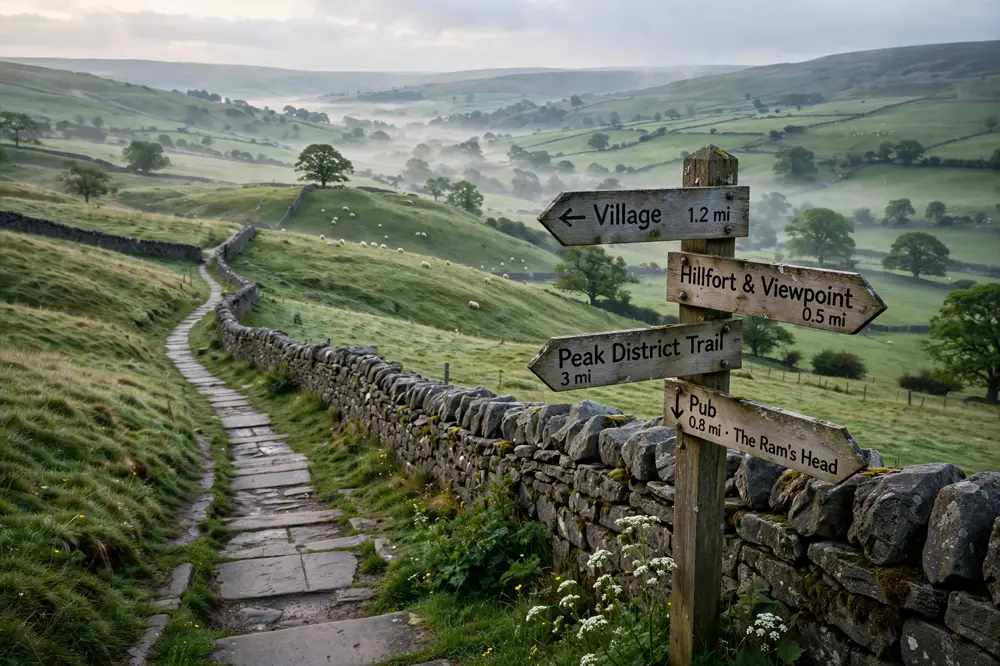
There is a particular kind of tiredness that only fresh air, green hills and a well-earned pub lunch can fix. Walking holidays in the UK have quietly become one of the most relaxing ways to take a break: no airport queues, no rigid itineraries, just a good path, a comfortable bed at the end of the day and countryside that changes with every mile. Whether you have a long weekend or a full week, a walking break lets you slow down, see places you would otherwise drive straight past, and come home feeling genuinely rested rather than in need of another holiday.
Why Walking Holidays in the UK Are So Relaxing
A walking holiday works at human pace. Instead of rushing between attractions, you absorb a landscape gradually: the smell of rain on a woodland path, the view that opens up at the top of a ridge, the village that appears exactly when you are ready for tea. It pairs naturally with the philosophy of slow travel, where the journey matters as much as the destination. Walking is also gentle, flexible exercise. You choose the distance, the terrain and the number of cake stops, so the break suits your fitness rather than testing it.
The UK is unusually well set up for this kind of holiday. Thousands of miles of public rights of way cross farmland, moorland, coast and forest, and waymarked national trails link the best of them into ready-made routes. Add a dense network of market towns, inns and self-catering cottages, and planning becomes refreshingly simple.
Choosing the Right Route for Your Fitness
The secret to a relaxing walking holiday is honest route planning. A comfortable day for most walkers is eight to twelve miles on gentle terrain, less if the route climbs steeply or the weather is poor. Look at the elevation profile as well as the distance: ten flat miles along a canal towpath feel very different from ten miles over Lakeland fells.
Good beginner-friendly options include canal towpaths, disused railway lines converted into trails, and low-level valley walks in the Yorkshire Dales or the Cotswolds. Coastal paths offer spectacular scenery but often involve repeated climbs in and out of coves, so build in shorter days. If you are planning a multi-day route, consider a luggage transfer service so you walk with only a daypack while your bags travel ahead to the next night’s accommodation. Our Great Britain travel guide is a useful starting point for comparing regions before you commit to a route.
The Best Types of Countryside Walks to Try
National trails such as the South West Coast Path, the Thames Path and the Cotswold Way are waymarked, well documented and broken into natural daily stages, which makes them ideal for a first walking holiday. Woodland walks in the Forest of Dean or the New Forest are sheltered and atmospheric, especially in autumn. Waterside routes along rivers and canals are flat, peaceful and dotted with villages. For something grander, the glens and coastal paths covered in our guide to cottage holidays in Scotland combine big scenery with cosy places to stay.
Mixing walk types across a week keeps things interesting: a coast day, a woodland day, a hill day and an easy village-to-village stroll give your legs variety and your camera plenty to do.
Where to Stay on a Walking Holiday
Your base matters as much as the route. A self-catering cottage gives you a bath for tired legs, a kitchen for unhurried breakfasts and a sofa for map-reading evenings. Staying in one place and walking circular routes avoids daily packing, while a linear trail with different stops each night gives a stronger sense of journey. Country inns and B&Bs along popular trails are used to walkers: many offer boot rooms, packed lunches and early breakfasts. Whichever you choose, book somewhere with a pub or café within stumbling distance of the front door. After six hours on the path, nobody wants another mile to dinner.
What to Pack for Comfortable Walking
Good kit prevents the small miseries that spoil a day: blisters, chills and soggy sandwiches. Worn-in waterproof boots are the single most important item, followed by proper walking socks and a breathable waterproof jacket. Pack layers rather than one heavy coat, carry more water than you think you need, and always take a map or downloaded route even on waymarked trails, because phone signal disappears in exactly the valleys you will love most. Our complete guide to what to pack for a self-catering cottage holiday covers the stay side of the list, from kitchen basics to the extras that make a cottage feel like home.
Planning Rest Days and Slow Moments
A relaxing walking holiday is not a route march. Schedule a rest day in the middle of a week-long trip and spend it gently: a garden visit, a long lunch, an afternoon with a book. Many walkers pair their break with a proper switch-off, and our guide to digital detox breaks shows how to leave the inbox behind without feeling cut off. If your legs need serious recovery, a few hours in a spa or a gentle swim works wonders; our round-up of UK spa breaks explains how to choose a retreat that fits a walking itinerary rather than fighting it.
Evenings deserve planning too. Arrive at each stop with time to wander, find the bakery for the morning and watch the light change. These unhurried hours are what people remember most fondly when they get home.
Staying Safe and Comfortable on the Trail
Check the forecast each morning and be willing to shorten the day if conditions turn. Tell someone your route, carry a charged phone and a small first-aid kit with blister plasters, and respect the countryside code: close gates, keep dogs under control around livestock and take litter home. On open moorland and high ground, weather can change within the hour, so an extra layer and a warm drink are never wasted weight. None of this is complicated; it is simply the habit of walking prepared, which keeps the day relaxed instead of eventful.
Final Thoughts
Walking holidays in the UK ask very little of you: a decent pair of boots, a route that matches your legs and the willingness to travel slowly. In return they give you landscapes you actually remember, villages you would never have found by car, and evenings that feel earned. Start with a weekend, keep the distances kind, and let the path set the pace. You may find it becomes the way you take every holiday from now on.
One last tip: build your first walking holiday around a single base and a handful of circular routes. It is the lowest-stress way to discover whether you prefer coast, woodland or high fells, and it leaves you free to make every day as long or as lazy as you like, which is rather the point of going in the first place.
