

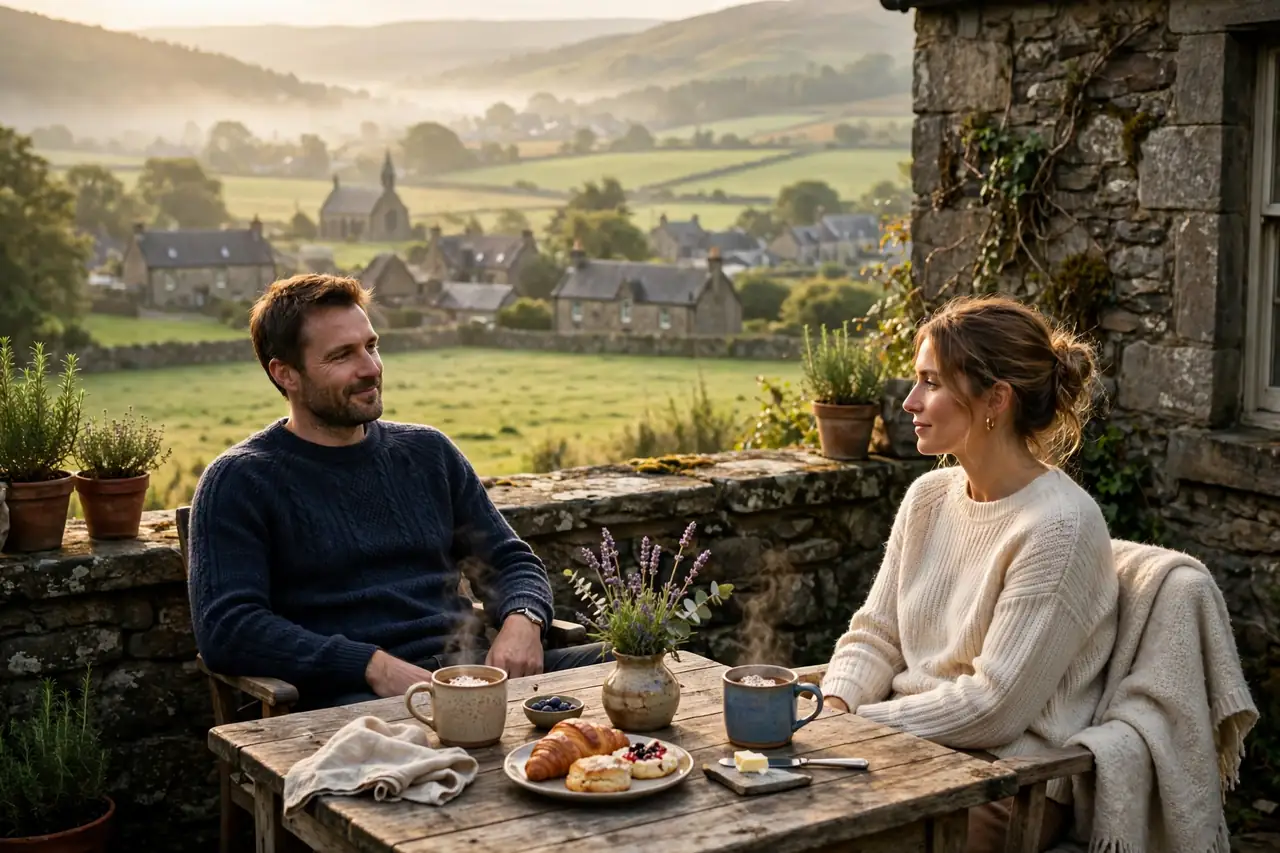
Most of us have come home from a holiday feeling like we need another one. The itinerary was packed, the days were long, and half the trip was spent in transit between places we barely had time to enjoy. Slow travel is the antidote to that familiar exhaustion. Instead of racing through a checklist of sights, it means choosing fewer places, staying longer in each, and leaving genuine room in the day for doing nothing at all. The result is a holiday that feels like a rest rather than a project, and one you remember for how it felt, not just for what you photographed.
What Is Slow Travel and Why Is It Growing?
Slow travel is less a formal movement than a shift in mindset. It borrows from the slow food idea that some things are better when they are not rushed, and applies the same thinking to holidays. In practice, it usually means basing yourself in one place for most or all of the trip, travelling shorter distances, and letting the days take a gentler shape. You might visit one village properly instead of five superficially, cook with local ingredients rather than eat every meal out, and repeat a favourite walk at a different time of day just to see how the light changes.
Its appeal is easy to understand. Travel has become cheaper and faster, but also more stressful: queues, connections, traffic, crowded landmarks and the quiet pressure to make every moment count. Slowing down removes much of that friction. It is often kinder to the budget, because one base and fewer transfers usually cost less than constant moving. It is kinder to the places you visit, too, because longer stays spread spending locally and put less strain on the busiest spots. Above all, it gives a holiday back its original purpose, which is to restore you.
Choose One Base and Stay Longer
The single most effective slow travel decision is to stay put. Pick one base for at least four or five nights, and ideally for the whole trip if it is a week or less. A self-catering cottage, a small guesthouse or a family-run hotel all work well, because they let you settle into small routines: morning coffee in the same spot, a bakery you return to, a landlord or host who starts to feel like a neighbour. Our guide to cottage holidays in Scotland shows how well a single rural base can anchor a trip, giving you a comfortable home to return to each evening while the surrounding area slowly reveals itself.
Staying longer also changes what you can do. Day trips become relaxed loops rather than logistical operations, because you are never packing a suitcase or checking out by ten. Rainy days stop being disasters and become part of the rhythm: a morning in with a book, then a cleared afternoon for the walk you had planned. And because you are not constantly relocating, you can shop at markets, cook simple meals, and live a little more like a temporary local than a passing tourist.
Plan Less, Experience More
Slow travel does not mean having no plan at all. It means planning the framework and leaving the middle loose. Book the base, the main travel legs and anything that genuinely sells out, then leave most days deliberately unscripted. A useful rule is one anchor activity per day at most: a market in the morning, a coastal walk after lunch, a long dinner. Everything else is space for whatever the day suggests. Our guide to planning a holiday without the stress covers the practical side of building a trip that stays calm from booking to departure.
Resist the temptation to fill gaps with just one more attraction. The moments people describe years later are rarely the tenth sight of the trip; they are the unplanned ones, the conversation in a café, the detour down a lane, the viewpoint found by accident. Spacious itineraries create the conditions for those moments. They also protect you when things go wrong, because a delayed train or a closed museum rearranges a loose day far more easily than a minute-by-minute schedule.
Travel Light and Travel Slowly
How you move shapes how the trip feels. Where possible, choose the slower option: a scenic rail journey instead of a short flight, a ferry instead of a connection, a walk or a bicycle instead of a taxi across town. The journey becomes part of the holiday rather than dead time between highlights. Even a driving holiday can be slow if you plan it that way, with shorter legs, longer stops and no daily deadline to reach the next bed. Our USA road trips guide makes the same point for long-distance touring: the routes people love most are the ones where the driving itself is given time to be enjoyed.
Packing matters more than most people expect. A heavy bag makes every move harder and quietly pushes you towards taxis, lifts and rushing. Travelling with less, and choosing versatile clothes you can layer and re-wear, makes walking to the station or stopping on impulse easy. The tips in our guide to packing a suitcase efficiently are a good starting point: if it does not earn its place, it does not come.
Build Rest Into Every Day
Rest should be a planned feature of the trip, not whatever is left over. That might mean protecting the first afternoon after arrival for settling in rather than sightseeing, keeping one full day with nothing booked at all, or simply starting later and finishing earlier than you would at home. For many travellers, travelling with fewer people helps as well: our look at small group travel explores how smaller groups keep days flexible and decisions easy, which suits a slower pace far better than a large organised tour.
Food is one of the easiest places to slow down. Choose one good meal a day and linger over it. Shop where local people shop, try the regional speciality even if you would not cook it at home, and let a long lunch be the day’s main event sometimes. Eating slowly in one place teaches you more about it than a highlights tour ever will.
Slow Travel Works for Short Breaks Too
You do not need a fortnight to travel slowly. A three-night break in one place, with one or two gentle plans and plenty of slack, can restore you more than a week of rushing. The trick is to resist treating a short break as a compressed long holiday. Pick somewhere within easy reach, stay in one bed, and let the days stay small: a walk, a market, a long lunch, an early night. Our ideas for affordable weekend vacations include plenty of destinations that reward exactly this approach, where the pleasure is in being there rather than in doing everything.
How to Start Your First Slow Trip
If the idea appeals but feels unfamiliar, start gently. Take a destination you already like and return to it for longer than usual, or choose one new place and give it the time you would normally split between three. Book a base you will enjoy spending time in, plan one anchor activity a day at most, and leave the rest open. Notice how different the holiday feels when you come home: if you return rested, clear-headed and full of small, specific memories, you have understood slow travel. From there, it tends to become not just a way of taking one holiday, but the way you prefer to take all of them.

1 Comment
Pingback: USA Road Trips: Best Routes & Travel Tips