

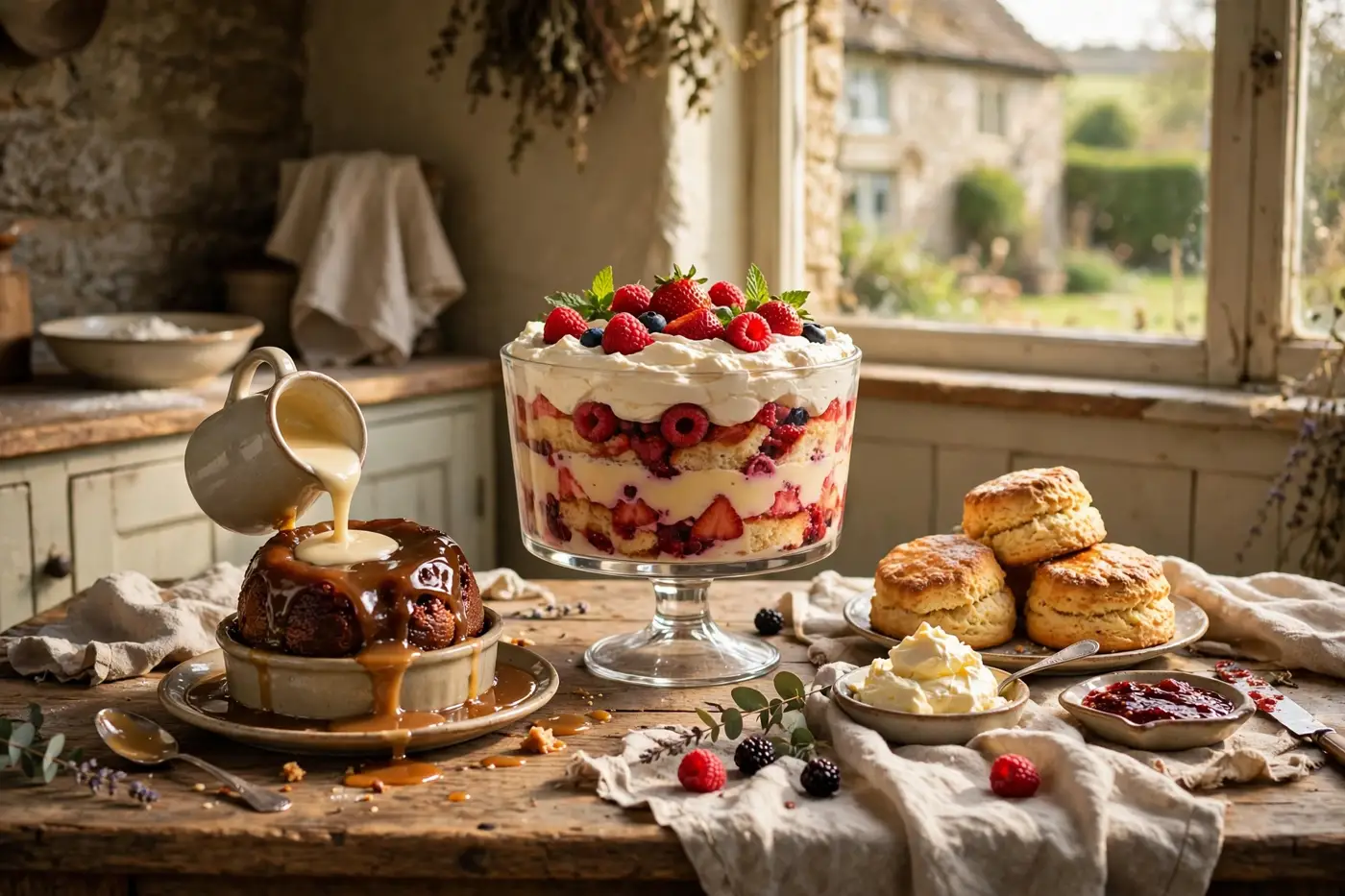
Every great British meal deserves a proper ending, and few cuisines do comfort quite like ours. Traditional British desserts are built on simple pleasures: warm sponge, sticky dates, tart fruit, thick custard and cream in quantities that would alarm a cardiologist. These are the puddings of school dinners, village fêtes and Sunday lunches, and the good news is that almost all of them are straightforward to make at home. This guide walks through the classics, explains what makes each one special, and shares the small techniques that turn a good pudding into a memorable one.
A Short History of Traditional British Desserts
Britain’s pudding tradition grew out of thrift and seasonality. Suet puddings stretched expensive ingredients, orchards supplied apples and plums for crumbles and pies, and the Victorian era added trifles, jellies and elaborate steamed sponges to the table. Regional favourites developed everywhere: Bakewell tart from Derbyshire, Eton mess from Berkshire, sticky toffee pudding from the Lake District. Many of these recipes survived because they rely on store-cupboard ingredients and forgiving methods, which is exactly why they still work in a modern home kitchen. If you enjoy exploring classic dishes from other traditions too, our collection of Italian starters shows the same respect for simple, well-loved recipes at the other end of the meal.
Sticky Toffee Pudding
If one dessert defines modern British comfort food, it is sticky toffee pudding: a dark, date-filled sponge drowned in warm toffee sauce and served with custard, cream or vanilla ice cream. The secret is soaking chopped dates in hot water with a little bicarbonate of soda, which softens them and gives the sponge its deep colour and tender crumb. The sauce is just butter, brown sugar and double cream, simmered until glossy. Make extra: it keeps in the fridge for a week and improves almost anything it touches, including a plain scoop of ice cream on a Tuesday.
Classic Sherry Trifle
A proper trifle is architecture: a base of sponge fingers soaked in sherry (or fruit juice), a layer of fruit and jelly, real egg custard, and a billowing top of whipped cream scattered with toasted almonds. The arguments start with the jelly. Some families insist on it; others consider it an outrage. Whichever camp you are in, the rules that matter are these: let each layer cool and set before adding the next, make the custard thick enough to hold a spoon mark, and chill the finished trifle for at least four hours so the flavours marry. Trifle is the ideal make-ahead dessert for a crowd, and it sits happily alongside the other classics in our guide to menu planning when you are organising a full celebration meal.
Eton Mess and Summer Fruit Desserts
Eton mess is summer in a glass: crushed meringue, lightly whipped cream and macerated strawberries folded together at the last moment so the meringue keeps its crunch. It takes ten minutes and forgives any level of cooking confidence. The same formula works with raspberries, poached rhubarb or a mixture of berries. For a slightly more structured summer pudding, line a bowl with white bread, fill it with simmered red and black fruits, weight it overnight and turn it out to reveal a deep purple dome that slices like a cake. Both desserts depend on ripe, flavourful fruit, so they are at their best from June to September.
Bread and Butter Pudding
The thriftiest pudding of all turns stale bread into something luxurious. Buttered slices are layered with raisins and a dusting of nutmeg, then soaked in a vanilla custard and baked until puffed and golden. Modern versions use brioche or panettone, and a spoonful of marmalade between the layers adds a bitter-orange lift that cuts the richness beautifully. It is a useful recipe to know if you are cooking in a holiday kitchen with whatever is to hand; our ideas for self-catering holiday meals include several more desserts and suppers built on the same make-do principles.
Scones, Jam and Clotted Cream
No discussion of traditional British desserts is complete without the cream tea, and no cream tea is complete without the argument: jam first or cream first? Cornwall says jam then cream; Devon says cream then jam. Both agree on the essentials: a warm, freshly baked scone with a tender crumb, good strawberry jam, and clotted cream thick enough to stand a spoon in. Scones take twenty minutes from bowl to table and stale quickly, so bake them the same afternoon you plan to eat them, and never, under any circumstances, microwave them back to life.
Tips for Making British Desserts at Home
A few habits lift every pudding in this guide. Weigh ingredients rather than guessing, because sponge ratios matter. Bring eggs and butter to room temperature before baking for a lighter crumb. Taste custard as you go and stop sweetening earlier than you think; most classic puddings are served with something sweet alongside. And remember that many of these desserts are naturally rich, so portion sizes can be modest, especially if you are balancing a full menu across the week; our balanced diet platter guide shows how a proper pudding still fits into an otherwise sensible pattern of eating. Finally, if you love the precision of classic technique, the same patience that makes a great trifle will serve you well with dishes like an authentic tagliatelle or the simple cheese dishes in our mozzarella recipes collection.
Apple Crumble and Other Baked Fruit Puddings
No survey of British puddings is complete without crumble: fruit bubbling under a rubble of butter, flour and sugar, served with custard in quantities limited only by the size of the jug. Apples are the classic filling, especially sharp Bramleys softened with a little sugar, but rhubarb in spring, plums in late summer and blackberries gathered from the hedgerow all work beautifully. The topping should be rubbed together coarsely, never to a paste, and a handful of oats or chopped hazelnuts adds crunch. Its close cousin, Eve’s pudding, hides the same stewed apples under a light sponge instead. Both are weeknight puddings rather than special-occasion ones: fifteen minutes to assemble, forty in the oven, and a kitchen that smells like autumn while they bake.
Final Thoughts
Traditional British desserts endure because they are generous, forgiving and built around ingredients any home cook can find. Start with sticky toffee pudding if you want guaranteed applause, keep a trifle in reserve for celebrations, and let the seasons decide your fruit desserts. Master two or three of these classics and you will never be stuck for a finale again.
Whichever pudding you choose for Sunday lunch, serve it warm, offer custard without being asked, and accept the compliments gracefully: that, too, is a proud British tradition.
