

Cooking on holiday should feel like part of the break, not a chore that followed you from home, and that is exactly what well-planned self-catering holiday meals achieve. With a short list of versatile ingredients, a few reliable ideas and a relaxed attitude to timing, you can eat better than most restaurants manage, spend less, and still keep kitchen time to a minimum. This guide covers breakfasts that set up the day, dinners that come together after a day out, picnics worth packing and the small habits that make self-catering feel easy rather than effortful.
Plan Before You Go: One List, Less Stress
The secret to relaxed holiday cooking is deciding most of it before you arrive. Sketch a loose plan for the days you will eat in, list the ingredients those meals share, and shop once for the bulk of it. Pasta, rice, eggs, cheese, tinned tomatoes, good bread and salad leaves can become a dozen different meals between them, so a single well-chosen shop covers far more than it first appears. Our guide to menu planning made simple walks through the same approach for everyday life, and it transfers perfectly to a holiday kitchen.
Check what the property provides before you travel: most cottages have the basics, but a favourite sharp knife, a cafetiere or a particular spice blend weighs little and makes cooking away from home far more pleasant. If you are heading somewhere rural, our guide to cottage holidays in Scotland is a useful reminder of how much easier a break becomes when supplies are sorted before you set off.
Breakfasts That Set Up the Day
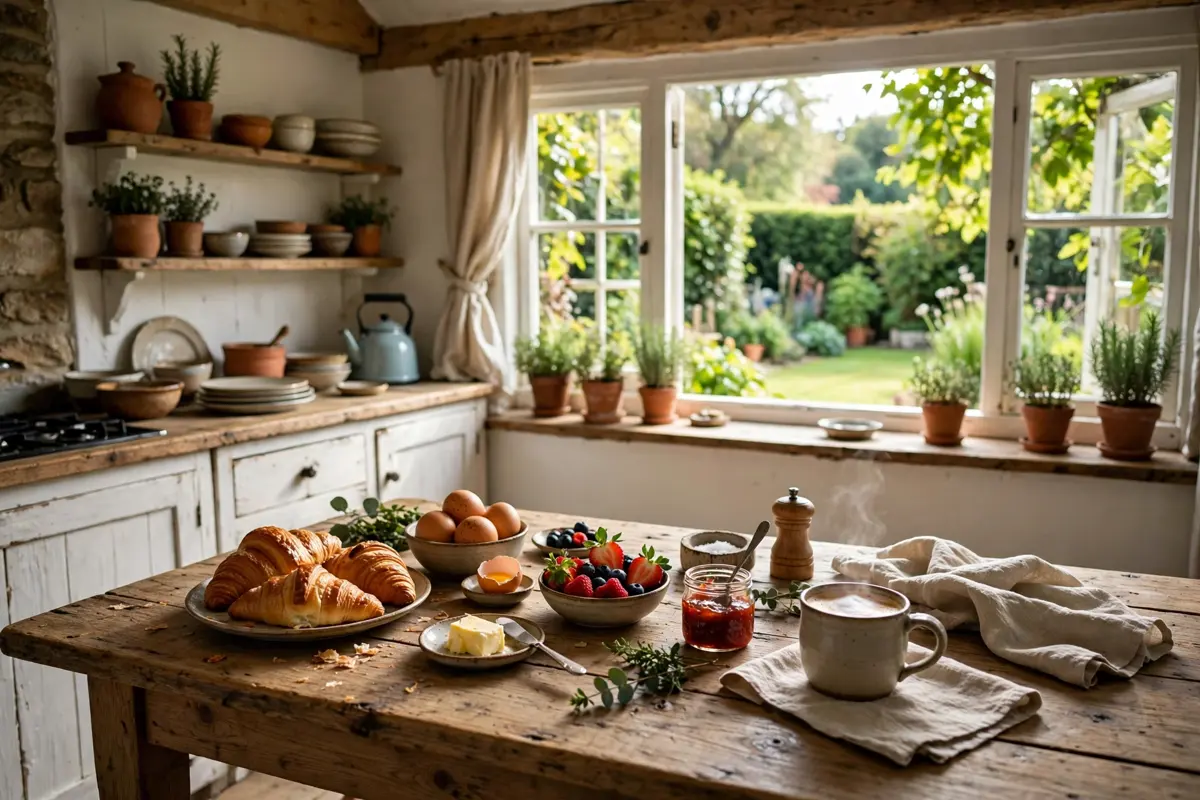
Holiday breakfasts can be slow in the best way. Keep them simple and flexible: croissants or good bread with jam and fruit, yoghurt with berries and honey, or eggs cooked however the group likes them with toast and coffee. A cooked breakfast on one morning of the trip feels like an event without becoming a daily obligation. Lay the table properly, sit down together and let breakfast take as long as it takes; on a self-catering break, time is the one ingredient you definitely have.
Easy Dinners After a Day Out
After a day of walking, sightseeing or doing very little at all, dinner needs to be quick, forgiving and satisfying. Pasta is the self-catering hero: it cooks fast, pairs with almost anything and pleases nearly everyone. Our collection of mozzarella recipes includes ideas that turn a ball of cheese, tomatoes and basil into a meal that tastes like a holiday in itself, and a classic authentic tagliatelle recipe is well within reach of a cottage kitchen. For a slower evening, put out a spread of starters and let everyone graze: the selection in our guide to Italian starters works beautifully as a light supper with bread, olives and a salad.
One-pot dishes earn their place too: a risotto stirred while someone opens a drink, a tray of sausages and vegetables roasted while baths are run, or a big pan of soup with crusty bread. Choose meals that wait for you, not ones you must wait on.
Picnics and Packed Lunches
Self-catering pays for itself at lunchtime. Sandwiches made from last night’s bread, cheese, fruit and a flask of coffee turn a viewpoint or a beach into the best restaurant in the area, at a fraction of cafe prices. Pack lunches the night before, keep them cool, and build the day around a stop somewhere beautiful rather than a search for somewhere open. Children especially remember picnics long after they forget sit-down meals.
Eating Well Without Trying
Holiday food does not need to be heavy to be enjoyable. Grilling, roasting and big fresh salads keep meals light, and the simple techniques in our guide to healthy cooking methods show how small changes in cooking style make everyday food feel fresher. Local markets and farm shops are worth a visit wherever you stay: whatever is in season locally will taste better than anything you brought with you, and buying it becomes part of the day out.
The Store-Cupboard Kit That Saves Every Meal
A small kit of long-life basics turns whatever fresh food you buy into proper meals. Salt, pepper, olive oil, vinegar, garlic, stock cubes, tinned tomatoes, pasta, rice and a jar of pesto cover most emergencies, while butter, cheese and eggs bridge any gap between shops. Add tea, coffee and something sweet for the evenings and you can face a closed village shop or a lazy morning without a flicker of stress. If the property already stocks some of these, so much the better; the point is that no meal on the trip should ever depend on a single ingredient you forgot.
Leftovers Are Tomorrow’s Lunch
Cook slightly more than you need at dinner and lunch tomorrow mostly makes itself. Extra roast vegetables become a frittata or fill sandwiches; leftover pasta bakes happily under cheese; surplus salad and cold meats turn into the picnic you were going to buy anyway. Building leftovers into the plan is the oldest self-catering trick there is, and it quietly stretches the food budget while cutting the number of times anyone has to think about cooking at all. On the final evening, a clean-out-the-fridge supper of everything remaining is a small tradition worth starting: it rarely looks elegant, and it almost always tastes better than expected.
A Sample Two-Day Pattern
Day one: arrive, unpack, and eat the meal you planned first because it needs no thought, perhaps pasta with a jar of good sauce, salad and garlic bread. Day two: a slow breakfast, a picnic lunch on a walk, and a cooked dinner using the fresh ingredients you bought that morning. Repeat the pattern, swap in a pub meal or a fish and chip supper when nobody feels like cooking, and the week organises itself. This rhythm suits the unhurried approach in our guide to slow travel: meals become part of the relaxation instead of interruptions to it.
Self-catering holiday meals succeed when they stay simple, shared and unhurried. Plan a little, shop once, cook easy things well and sit down together to enjoy them. Do that, and the kitchen becomes one of the best rooms of the holiday rather than the one you were trying to escape.
