

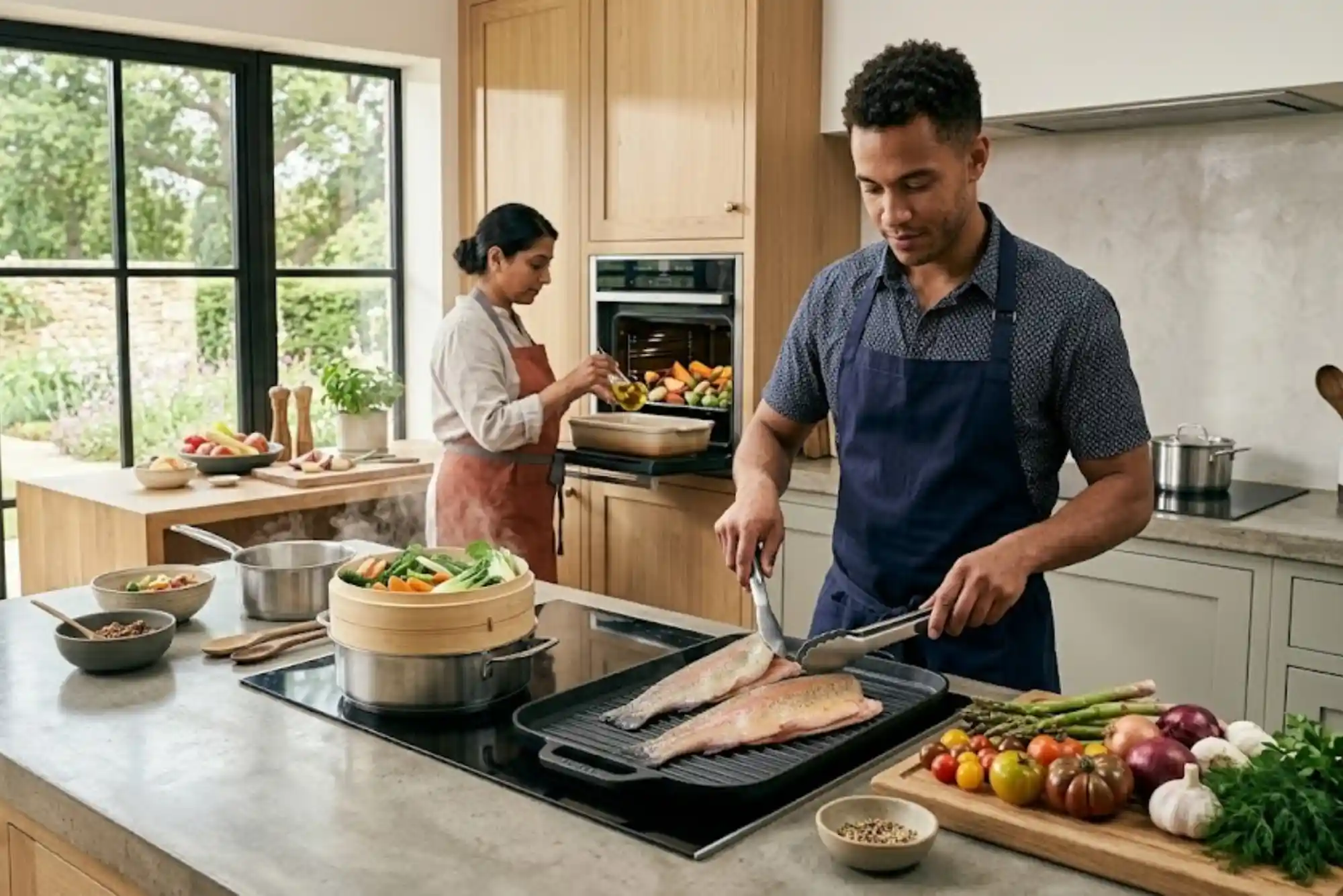
The way food is prepared can have a significant impact on its nutritional value. While choosing wholesome ingredients is important, healthy cooking methods can help preserve nutrients, reduce unnecessary fats, and support better overall eating habits.
Many people focus solely on what they eat, but how food is cooked also plays a major role in creating balanced, nutritious meals. By understanding different cooking techniques and their effects on food, it becomes easier to prepare meals that support long-term health without sacrificing flavour.
Whether you’re cooking for yourself, your family, or following a structured nutrition plan, adopting healthier cooking methods can make everyday meals more nourishing and enjoyable.
What Are Healthy Cooking Methods?
Healthy cooking methods are techniques that minimise the loss of nutrients while reducing the need for excessive fats, sugars, and highly processed ingredients.
These methods often focus on:
- Preserving vitamins and minerals
- Reducing added fats
- Maintaining natural flavours
- Improving portion control
- Supporting balanced eating habits
The goal is not to eliminate enjoyment from food but to prepare meals in ways that maximise both nutrition and taste.
Steaming
Steaming is widely regarded as one of the healthiest cooking methods available. Food is cooked using hot steam rather than direct contact with water or oil.
Benefits of Steaming
- Helps preserve water-soluble vitamins
- Requires little or no added fat
- Retains natural colours and textures
- Suitable for vegetables, fish, and poultry
Vegetables such as broccoli, carrots, green beans, and spinach often maintain more nutrients when steamed compared to some other cooking techniques.
Baking
Baking uses dry heat in an oven and can be an excellent alternative to frying.
Benefits of Baking
- Requires less oil
- Produces consistent cooking results
- Suitable for vegetables, fish, poultry, and wholegrain dishes
- Supports batch cooking and meal preparation
Baked vegetables can develop rich flavours while maintaining much of their nutritional value.
Grilling
Grilling allows excess fat to drip away from food during cooking, making it a popular choice for lean proteins.
Benefits of Grilling
- Enhances flavour without heavy sauces
- Reduces added fats
- Works well with vegetables and lean meats
- Can support lower-calorie meal preparation
Care should be taken to avoid excessive charring, which may affect food quality.
Poaching
Poaching involves gently cooking food in liquid at relatively low temperatures.
Benefits of Poaching
- Requires no added oil
- Preserves moisture
- Suitable for fish, eggs, chicken, and fruit
- Produces tender textures
This method is particularly useful when preparing delicate proteins.
Stir-Frying with Minimal Oil
Traditional stir-frying can be adapted into a healthier cooking method by using small amounts of oil and plenty of vegetables.
Benefits of Stir-Frying
- Quick cooking time
- Helps retain texture and colour
- Encourages vegetable consumption
- Supports balanced meal creation
Using healthy oils in moderation and avoiding excessive sauces can help keep stir-fried meals nutritious.
Roasting
Roasting is a versatile cooking technique that works well for vegetables, poultry, fish, and plant-based ingredients.
Benefits of Roasting
- Develops natural flavours
- Requires minimal added fat
- Suitable for large meal preparations
- Encourages consumption of whole foods
Roasted root vegetables, peppers, courgettes, and squash are particularly popular in healthy meal plans.
Healthy Cooking Methods and Nutrient Retention
Different nutrients respond differently to heat, moisture, and cooking duration.
For example:
- Vitamin C can be sensitive to prolonged heat.
- B vitamins may be affected by excessive boiling.
- Some nutrients become easier to absorb after cooking.
- Healthy fats can deteriorate if repeatedly overheated.
Using a variety of cooking methods can help maximise overall nutrient intake.
Building a Healthy Meal Around Cooking Methods
Healthy cooking is most effective when combined with balanced food choices. Rather than focusing on individual ingredients, it helps to think about complete meals.
A nutritious meal may include:
- Steamed vegetables
- Grilled fish or chicken
- Wholegrain carbohydrates
- Healthy fats from nuts, seeds, or olive oil
Using a balanced diet platter approach can help ensure meals contain appropriate proportions of key food groups.
How Healthy Cooking Supports Clean Eating
Many healthy cooking methods align naturally with clean eating principles because they focus on whole foods and minimal processing.
Examples include:
- Steaming fresh vegetables
- Baking lean proteins
- Preparing homemade soups
- Roasting seasonal produce
For those interested in developing healthier dietary habits, a structured clean eating food plan can complement these cooking techniques and help create sustainable routines.
The Role of Healthy Cooking in Menu Planning
Choosing healthy cooking methods becomes easier when meals are planned in advance.
Effective menu planning allows households to:
- Create balanced meals
- Reduce reliance on convenience foods
- Improve grocery shopping efficiency
- Support nutritional goals
- Minimise food waste
Planning meals ahead also makes it easier to incorporate a wider variety of cooking techniques throughout the week.
Common Mistakes to Avoid
Using Excessive Oil
Even healthy oils contribute calories, so moderation remains important.
Overcooking Vegetables
Excessive cooking can affect texture, appearance, and some nutrient levels.
Relying on Processed Sauces
Many commercial sauces contain significant amounts of sugar, salt, and additives.
Skipping Variety
Using only one cooking technique may limit dietary diversity and meal enjoyment.
Practical Tips for Healthier Cooking
- Use herbs and spices instead of excessive salt.
- Choose lean protein sources where appropriate.
- Include vegetables in most meals.
- Experiment with steaming and roasting.
- Prepare meals at home more frequently.
- Batch cook nutritious recipes for busy days.
Small changes in cooking habits often lead to meaningful improvements over time.
Trusted Nutrition and Cooking Guidance
For evidence-based advice on healthy eating, cooking practices, and nutritional wellbeing, the British Nutrition Foundation provides practical resources covering food preparation, dietary balance, and healthy lifestyle choices.
Final Thoughts
Healthy cooking methods can make a significant difference to the nutritional quality of everyday meals. Techniques such as steaming, baking, grilling, roasting, poaching, and light stir-frying help preserve nutrients while reducing unnecessary fats and highly processed ingredients.
When combined with balanced meal choices, thoughtful menu planning, and a focus on whole foods, these cooking methods can support healthier eating habits that are both practical and sustainable. By making small adjustments in the kitchen, it becomes easier to enjoy nutritious meals without compromising on flavour or satisfaction.
