


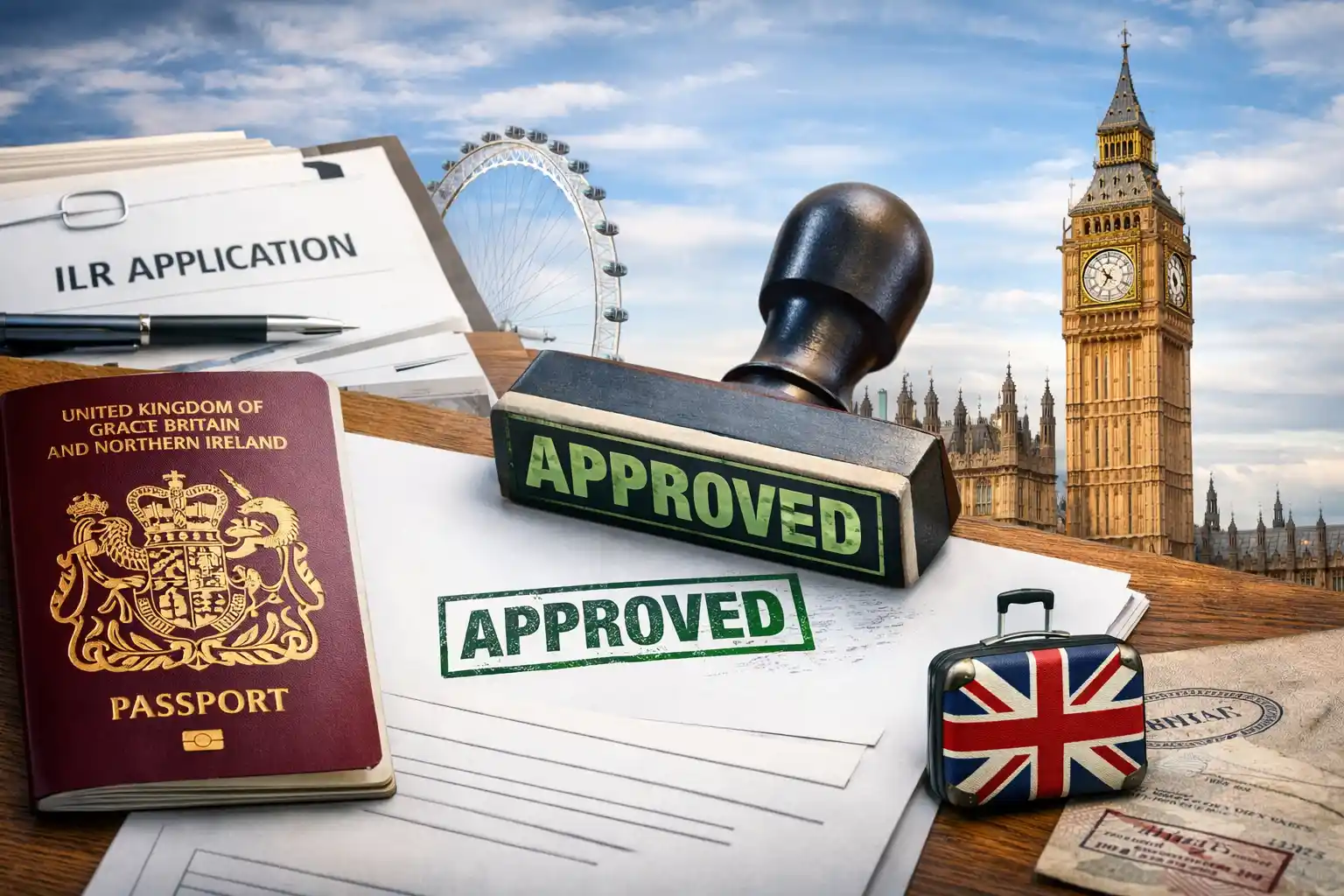
Indefinite Leave to Remain (ILR) is the main settlement status in the UK for people who have already spent several years lawfully in the country. It allows individuals to live, work, start a business, and study without time limits. Applicants also no longer need visa renewals or sponsorship once ILR is granted. For many, the journey to ILR is the final stage before applying for British citizenship.
Switching to ILR from a temporary route requires forward planning. The Home Office assesses time spent in the UK, conduct, financial circumstances, compliance with previous visa rules, English language ability, and knowledge of life in the UK. Preparation varies depending on the route used to reach settlement, but several requirements apply to almost everyone.
Core ILR Requirements That Apply Across Routes
1. Continuous Residence
The first requirement is showing sufficient time spent in the UK under a qualifying route. For most work and family visas, the qualifying period is five years. Long Residence applicants must show ten years of lawful residence. Some routes, such as Global Talent, permit settlement after three years, but this depends on the endorsement category and work activity.
Absence rules also matter. Applicants must account for time spent outside the UK during the qualifying period. As a general rule, absences should not exceed 180 days in any rolling 12-month period, though some categories have exceptions for scientific, academic, or technical travel linked to ongoing work.
Evidence for residence typically includes passports, visas, biometric data, travel stamps, airline confirmations, and employer letters. Where travel records are incomplete, applicants may submit written explanations supported by secondary evidence.
2. English Language and Life in the UK Test
Two separate requirements must be met for knowledge and language:
- Passing the Life in the UK Test
- Providing evidence of English language proficiency
Most applicants meet the English requirement through a Secure English Language Test (SELT) at level B1 or higher, or by holding a recognised degree taught in English. Some nationalities are exempt. Tests must be taken at approved centres; applicants frequently risk delays by using certificates that have expired or are not recognised for settlement.
The Life in the UK Test must be passed before submitting the ILR application. A failure resets the process entirely, so early preparation helps prevent last-minute stress.
3. Identity and Document Evidence
ILR applications require a higher standard of document organisation compared to standard visa applications. The Home Office expects proof of identity, address, lawful residence, visa history, financial activity, and relationship history (for dependants).
Applicants should prepare:
- Current passport plus previous passports held during residence
- BRP or eVisa share code
- Full travel history
- Address records
- Tax documents
- National Insurance contributions (if employed)
- Police registration certificate (if applicable)
Those with gaps in documentation may need to provide written statements supported by auxiliary evidence such as HMRC records, tenancy agreements, council tax bills, school records, or employer letters.
4. Conduct and Immigration Compliance
The suitability aspect of ILR focuses on conduct and compliance. Criminal convictions, unpaid debts to the government, breaches of immigration rules, and misleading statements can prevent approval. Even minor matters such as parking fines are expected to be disclosed to avoid accusations of withholding information.
Applicants who overstayed a visa in the past, entered through the wrong route, or changed routes illegally may experience delays or refusals. Honesty is central; concealment is treated as deception and can cause long-term barriers to settlement.
Route-Specific Requirements Applicants Should Prepare For
Switching to ILR depends heavily on the route that brought the applicant to the UK, and those preparing to switch visas to ILR status should be aware that each category carries its own expectations.
Skilled Worker Route
Those applying from a Skilled Worker visa must meet both salary and role requirements. The Home Office checks that:
- The role continues
- The salary meets the required level
- The SOC code matches the sponsored job
- The employer remains approved as a sponsor
Salary thresholds are rising, with proposals indicating a baseline of £41,700 for settlement. Employer letters confirming ongoing employment and necessity are standard evidence. Any past job changes, pay increases, or promotions must align with the original sponsorship conditions.
Partner or Spouse Route
Partner route applicants must evidence a genuine and continuing relationship. Proof of cohabitation across the qualifying period is central. Examples include:
- Joint financial accounts
- Joint tenancy or mortgage records
- Utility bills
- Council tax bills
- Official letters sent to the same address
Applicants must also show compliance with the family financial requirement through payslips, self-employment records, or savings. Absences that relate to family emergencies or travel can be explained, but evidence should support context.
Global Talent Route
Global Talent applicants must show they have continued working within their endorsed field. Evidence generally includes tax documents, contracts, publications, research output, or company filings. HMRC records are often used to demonstrate economic activity.
Innovator Founder Route
Those transitioning from Innovator Founder must show tangible business activity. Evidence includes:
- Company accounts
- Share documents
- Employment records
- Business tax filings
- Client contracts or revenue figures
- Regulatory compliance for relevant sectors
The Home Office assesses viability, progress, and contribution to UK economic activity.
Long Residence Route
Applicants relying on ten years of lawful residence must prove every year of their stay was lawful. Those with past overstays, long absences, or irregularities should prepare explanatory evidence early.
Student or Graduate Route
Students do not settle directly. They generally switch to a work or family route first. Their preparation for ILR involves keeping lawful status, tracking absences, and ensuring post-study work fits within a qualifying route.
Documentation Checklist for ILR
While requirements differ across routes, most applicants benefit from preparing a structured document set that includes:
- Passports and BRP/eVisa
- Evidence of English and Life in the UK Test
- Employment and tax records
- Bank statements and payslips
- Address and tenancy records
- Relationship evidence for partner route
- Travel and absence proof
- Explanatory letters for anomalies
Clear document organisation shortens processing time and reduces requests for additional information.
How the Application Process Works
ILR applications are submitted online. Applicants upload supporting documents either digitally or via a UKVCAS centre. Biometrics are confirmed through fingerprinting and photographs. Decisions vary by service: standard applications take months, while priority and super priority options shorten the wait at a higher fee.
Applicants should avoid submitting excessive or random evidence. The Home Office prefers documents that directly support eligibility.
Common Issues That Undermine ILR Applications
Several predictable problems cause delays or refusals:
- Salary below Skilled Worker thresholds
- Missing cohabitation evidence for partner route
- Gaps in residence or unclear travel history
- Incomplete tax payments or HMRC discrepancies
- English test not approved for settlement
- Misstatements or incomplete disclosure
- Uploading documents that contradict each other
Addressing such issues months in advance can prevent last-minute complications.
Looking Ahead to 2026: Earned Settlement
The UK government has proposed major changes to settlement rules, known as “earned settlement”. The current five-year model for most routes will shift toward a ten-year baseline that can be reduced or extended depending on income, English ability, integration, and conduct. Dependants will be assessed independently rather than being attached to the main applicant. Lower-paid roles may face longer settlement timelines.
Applicants aiming for ILR in future years should expect higher expectations around English language, financial self-sufficiency, and contribution to the UK.
FAQs
Can time spent on multiple visa categories be combined for ILR?
In some situations, yes. Time spent on different qualifying routes can be combined, such as Skilled Worker with Partner or Innovator Founder with Partner. Others cannot be combined, such as visitor or short-term student visas. Applicants using Long Residence can combine all lawful periods, regardless of visa category.
Do applicants need to hold a BRP to qualify for ILR?
Applicants do not need to hold a valid BRP at the time of applying, but they must hold lawful status up to the submission date. Those transitioning to eVisas can use a share code instead. BRPs are being phased out by the end of 2024 in favour of digital status records.
Does time waiting for a decision count toward the qualifying period?
Time spent lawfully in the UK while a valid in-time application or administrative review is pending normally counts as continuous residence. Gaps caused by out-of-time applications or appeals may not count and can complicate eligibility, so applicants should check their history before relying on borderline periods.
Can applicants apply for ILR from outside the UK?
No. ILR applications must be submitted from within the UK. If an applicant leaves the UK while the application is pending, the Home Office may treat the application as withdrawn. Applicants should avoid international travel until they receive a decision or have confirmed rules for priority processing.
Do children automatically get ILR when the main applicant qualifies?
Not always. Children must meet their own criteria for settlement. UK-born children may qualify with a parent, while older children may need independent assessments under new settlement proposals. Future reforms anticipate dependants being assessed separately based on English, contribution, conduct, and residence.
